The Commercial Record: What HCI 2009’s Exhibitors Reveal About the UK UX Toolchain

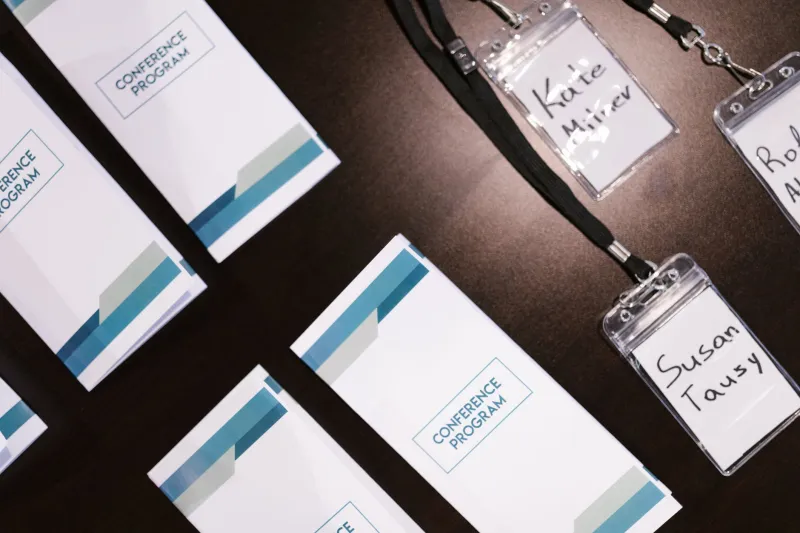
Photo by Photo by Stuart Frisby on Unsplash on Unsplash
An Underused Primary Source
Conference archives tend to privilege the paper programme. Keynotes are transcribed, posters are photographed, and delegate bags are catalogued with a diligence that the commercial exhibition rarely receives. Yet the sponsor hall at HCI 2009 offers something the academic record cannot: evidence of what UK practitioners were prepared to pay for. Exhibitor brochures, stand graphics, price lists, and the careful phrasing of sales conversations constitute a material record of the toolchain as it was actually assembled in laboratories, consultancies, and university departments.
Reading that record in 2026 is instructive. The commercial floor of a conference is not merely a marketplace; it is a snapshot of assumptions about how UX work should be done, funded, and justified to clients. For historians of the field, and for UK researchers tracing the professionalisation of UX, the exhibitor materials deserve the same scrutiny as the proceedings.
Prototyping Software and the Licence Question
The 2009 exhibition floor reflected a software market still organised around perpetual licences and desktop installation. Prototyping vendors marketed feature depth and fidelity, often with an emphasis on the individual designer’s workstation rather than team-wide collaboration. Brochures foregrounded seat counts, upgrade paths, and the virtues of owning a version outright.
By 2026, the dominant model has shifted decisively toward subscription access and browser-based collaboration. The change is not merely commercial. It altered the unit of purchase: from a tool installed on a machine to a workspace shared across an organisation. The 2009 exhibitor material helps date that transition, showing a moment when the language of ownership still carried weight and when the case for recurring expenditure had not yet become default.
For UK consultancies, the licence question was also a question of client billing. A perpetual licence could be absorbed into overheads; a subscription invited scrutiny of ongoing costs. The sponsor hall records that negotiation in miniature, through the offers and financing options vendors chose to display.
Eye-Tracking, Hardware, and the Laboratory Ideal
Hardware exhibitors at HCI 2009 presented eye-tracking and interaction equipment in terms that assumed a dedicated laboratory. Stand materials emphasised calibration, controlled lighting, and the authority of physiological measurement. The equipment was often positioned as an investment in rigour, differentiating a consultancy that could afford it from one that could not.
Two decades later, the picture is more distributed. Portable eye-tracking devices and software-based analysis have lowered barriers to entry, while remote testing platforms have moved much observation out of the lab altogether. The 2009 exhibitor record captures the high-water mark of a particular laboratory ideal: the belief that credible usability work required specialised rooms and capital equipment.
That ideal did not vanish so much as fragment. Some UK labs still maintain dedicated facilities, particularly in regulated sectors and academic institutions. But the commercial floor of 2009 shows a toolchain organised around hardware purchase and maintenance contracts, a model that the subsequent decade of software-led remote research would substantially reorder.
Consultancies and the Retainer Economy
Usability consultancies occupied a distinctive position in the sponsor hall. Their stands rarely sold products; they sold expertise, typically framed as audits, expert reviews, and project-based support. The business model was a familiar one of day rates and retainers, with credibility signalled through methodological pedigree and client lists.
In 2026, that model persists but has been reshaped by embedded research and in-house teams. The consultancy presence at HCI 2009 is therefore a useful index of a moment when external expertise was more routinely procured as a discrete service. Exhibitor materials from the period often describe usability as a specialist intervention rather than an ongoing organisational capability, a framing that UK UX practitioners have since spent considerable effort revising.
The archive value here lies in the ordinary: the rate cards, the service tiers, the case studies chosen to impress. These are the artefacts that show how the profession presented its value to buyers, not merely how it presented itself to peers.
What Survived, What Did Not
Tracing the exhibitor list forward to 2026 produces a mixed record. Subscription software, remote testing, and integrated analytics have become the default infrastructure of UK UX practice. Several categories of exhibitor, by contrast, have thinned or disappeared: standalone laboratory hardware vendors, niche prototyping tools without a collaboration story, and consultancies whose offer remained narrowly defined around inspection methods.
Survival was not simply a matter of technical quality. The exhibitors who endured tended to align with changing procurement norms: annual budgets, cross-team access, and demonstrable integration with existing workflows. The 2009 sponsor hall records the early stages of that alignment, often awkwardly, in brochures that touted features while underestimating the organisational shift underway.
A Record Worth Cataloguing
For an archive devoted to the conversations that shaped UX, the commercial floor is not a distraction from the intellectual history. It is part of it. The tools practitioners bought determined what methods were feasible, what evidence was producible, and what arguments could be made to clients. HCI 2009’s exhibitors documented those constraints in disposable form: leaflets, stand panels, and price sheets that were never intended to last.
In 2026, as UK UX continues to debate the balance between craft, research rigour, and commercial pressure, the sponsor hall offers a grounded perspective. It shows a field professionalising through procurement as much as through publication. The next task for the archive is to catalogue that material before it is lost, and to treat the exhibition floor as a primary source in its own right.